Biogas for Farms: How It Works, Uses, Costs & Benefits
Agricultural farms generate large quantities of organic material every day. Animal manure, crop residues, vegetable waste and food-processing residues are often treated simply as waste, even though they contain valuable energy and nutrients.
A biogas system allows farms to recover part of this value by converting suitable organic material into two useful products: methane-rich biogas that can be used as an energy source, and digestate that can be returned to agricultural production as a nutrient source.
However, biogas is not automatically suitable for every farm. The success of a system depends on having the right feedstock, correct system sizing, consistent operation and, most importantly, a practical use for the energy and digestate being produced.
At The Green Van, we look at biogas as part of the wider farm system rather than simply as a piece of equipment.
1. What Is Biogas?
Biogas is produced through a biological process called anaerobic digestion.
During this process, microorganisms break down organic material inside a digester in the absence of oxygen.
The basic process is:
Organic Waste → Anaerobic Digester → Biogas + Digestate
The resulting biogas is a methane-rich gas that can be used as a fuel. The remaining material, known as digestate, contains nutrients that can potentially be returned to the farm.
This creates an opportunity to turn a waste-management problem into both an energy source and a nutrient-recycling system.
2. What Farm Waste Can Be Used?
One of the most common feedstocks for agricultural biogas systems is animal manure, particularly where livestock are housed or manure can be collected regularly.
Other suitable materials can include:
Animal manure • Vegetable and fruit waste • Crop residues • Food waste • Agricultural processing residues • Other biodegradable organic materials
Different materials produce different quantities of gas and behave differently inside a digester.
It is also possible to combine different organic materials through co-digestion. For example, manure may be combined with suitable food or vegetable waste to increase the amount of biodegradable material entering the system.
However, not everything biodegradable should automatically be placed inside a digester.
Woody material, excessive bedding, sand, stones, plastics, chemicals and other contaminants can create operational problems. Some agricultural residues may also require shredding, mixing or other preparation before entering the system.
The feedstock should therefore be evaluated before the system is designed.
3. How Does Anaerobic Digestion Work?
Organic material is introduced into a sealed digester where microorganisms gradually break it down.
The process can be simplified into five stages:
Feed Preparation → Digestion → Biogas Production → Gas Collection → Digestate Discharge
For the biological process to remain stable, several conditions need to be managed properly, including:
Temperature • pH • Feed quantity • Feed consistency • Retention time • Solids concentration • Organic loading
Sudden changes in feedstock or excessive loading can disturb the microorganisms responsible for digestion and reduce gas production.
This is why a biogas system should be considered a living biological system, not simply a storage tank for organic waste.
4. What Can Farm Biogas Be Used For?
The best use of biogas depends on how much gas is being produced and what energy the farm already consumes.
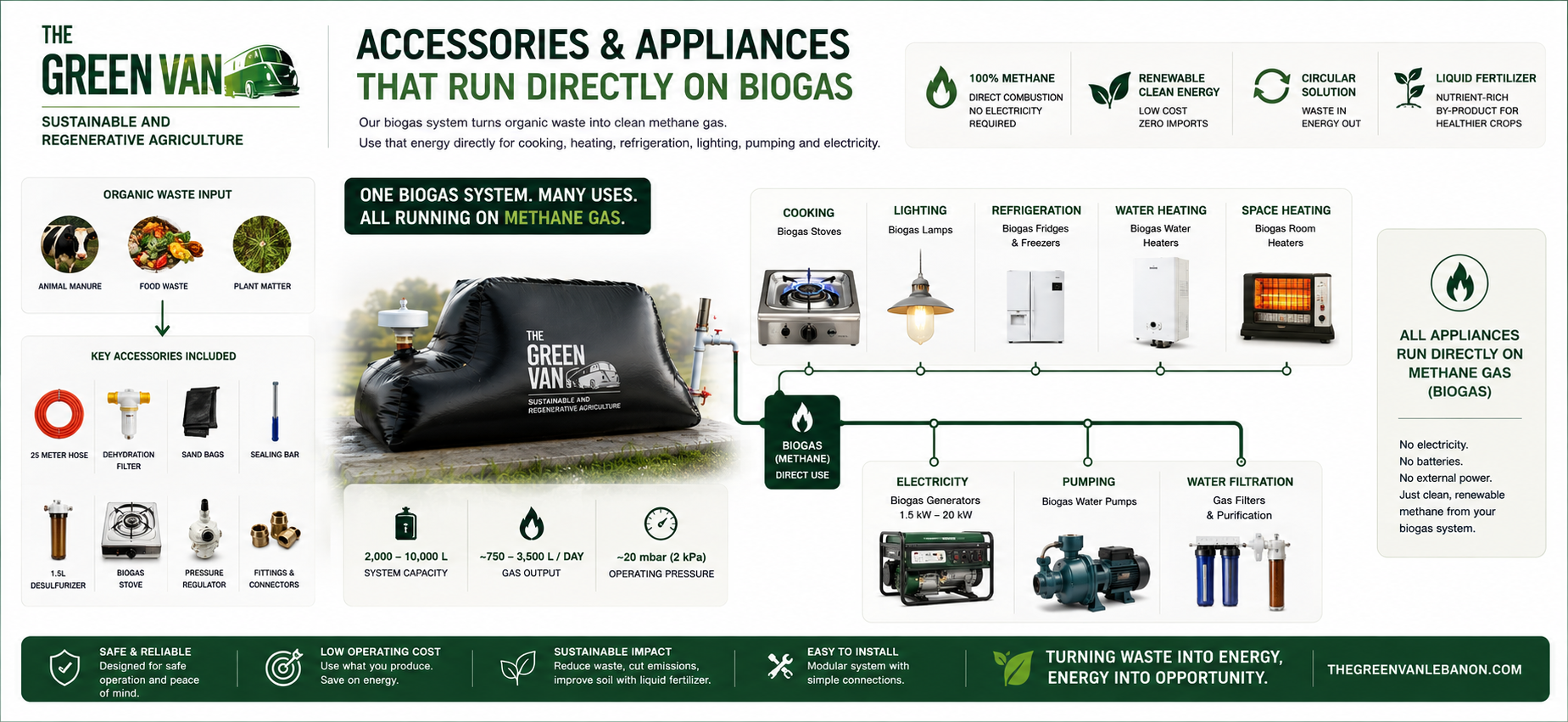
Cooking
One of the simplest applications is replacing conventional cooking fuel using a compatible biogas burner.
For farms, rural houses, worker accommodation or agricultural facilities with regular cooking requirements, this can provide a direct use for the gas produced every day.
Water and Space Heating
Biogas can also provide heat for water heating, rooms, livestock facilities and other suitable agricultural applications.
Refrigeration
Compatible absorption refrigerators and freezers can operate using heat generated from biogas combustion, allowing gas to contribute directly to food and agricultural-product storage.
Electricity Generation
Where sufficient and consistent gas production is available, biogas can fuel appropriately configured generators.
Electricity generation, however, requires considerably more attention to gas quantity, quality, filtration and engine requirements than simply using the gas for cooking or heating.
For small farms, direct use of the gas can sometimes be more practical than attempting to generate electricity from a limited gas supply.
5. Digestate: The Other Valuable Product
Gas is only one output of anaerobic digestion.
The remaining digestate still contains agriculturally useful nutrients and organic material.
Depending on its characteristics and the farming system, digestate can potentially be incorporated into:
Crop fertilization • Fertigation programs • Orchard nutrition • Soil fertility management • Nutrient recycling
This can help return nutrients from animal manure and agricultural waste back into crop production.
However, digestate should not automatically be considered a complete replacement for fertilizer.
Its nutrient composition depends heavily on the materials entering the digester. Where digestate is being used commercially or as an important part of a fertility program, its nutrient characteristics should be understood and applications adjusted according to crop and soil requirements.
6. How Do You Size a Biogas System?
One of the biggest mistakes when considering biogas is choosing the digester first and then trying to find enough material to feed it.
Sizing should work in the opposite direction.
Start by determining:
How much suitable organic waste is available every day?
Then evaluate:
Feedstock type → Daily quantity → Required preparation/dilution → Digestion requirements → Expected gas production → Daily energy demand → Required gas storage
A livestock farm producing manure every day may have a very different system from a farm processing vegetables seasonally.
Similarly, a household wanting cooking gas requires a very different energy output from a commercial farm attempting to operate a generator.
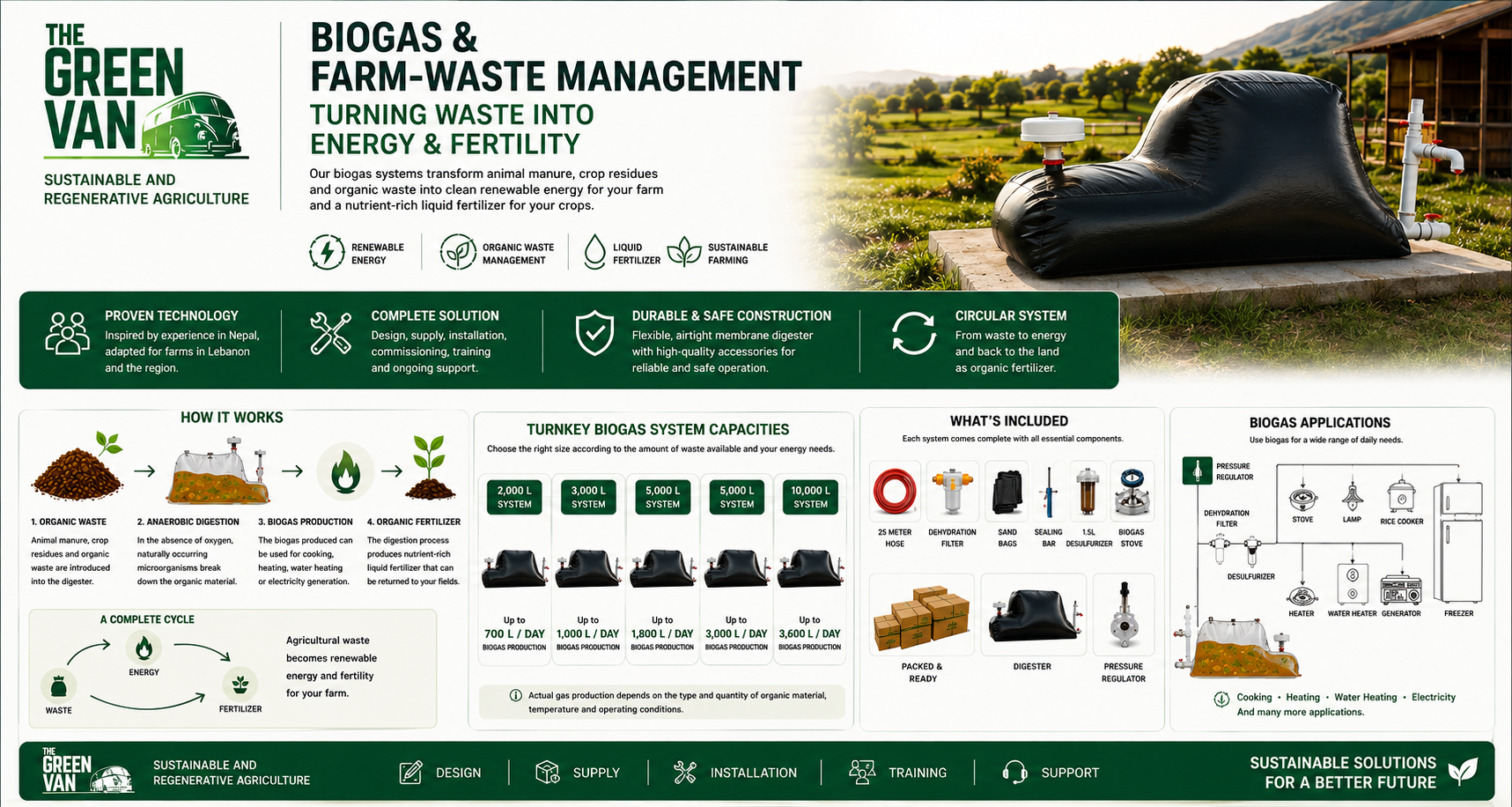
The Green Van's modular systems range from 2,000 to 10,000 liters, with the range designed for different levels of organic-waste input and energy requirements.
Across the modular system range, expected gas production is approximately 750–3,500 liters per day, depending on system capacity, feedstock and operating conditions.
For larger operations, systems should be designed specifically around the available waste stream and required energy output rather than simply scaling up a small digester.
7. A Biogas System Is More Than the Digester
A complete installation can include:
Feed inlet → Digester → Gas storage → Moisture filtration → Desulfurization → Gas piping → Pressure management → Appliances or generator → Digestate outlet
Depending on the scale and application, additional components may include pumps, mixing systems, feedstock preparation, heating, gas monitoring and automation.
Gas treatment becomes particularly important when biogas is being supplied to sensitive equipment such as generators.
Moisture and hydrogen sulfide can damage equipment if they are not properly managed.
8. Operating a Biogas System
A correctly designed system should be relatively straightforward to operate, but it still requires regular attention.
The operator needs to manage:
Regular feeding • Consistent feedstock • Digester conditions • Gas leaks • Moisture filters • Desulfurization • Gas pressure • Digestate discharge • Equipment maintenance
A system that is fed heavily one day and receives almost nothing for several days will not behave the same way as a system receiving a consistent daily feed.
Temperature is another important consideration. Biological activity generally slows under colder conditions, meaning seasonal temperature changes can affect gas production unless the system and operation account for them.
Because biogas is combustible and may contain potentially hazardous gases, installations must also incorporate appropriate gas handling, ventilation, equipment and safety procedures.
9. How Much Does a Farm Biogas System Cost?
There is no meaningful universal price for a biogas project because the digester itself represents only part of the complete installation.
Cost depends on factors including:
System capacity • Feedstock preparation • Civil works • Gas storage • Filtration • Piping • Appliances • Automation • Pumps • Heating • Generator capacity • Installation requirements
Small modular systems intended primarily for cooking, heating or other direct gas uses can be relatively simple.
Larger commercial installations designed around significant manure volumes, electricity generation or industrial waste processing require considerably more infrastructure.
The correct question is therefore not simply:
“How much does a biogas system cost?”
It is:
“What system is required to process the available waste and produce energy that the farm can actually use?”
10. Where Does the Financial Return Come From?
Biogas economics should be evaluated across the complete farming operation.
Potential savings or revenue can come from:
Reduced fuel purchases • Reduced electricity consumption • Fertilizer value of digestate • Reduced waste-disposal costs • Improved manure management • Potential processing of suitable external organic waste
This means two identical digesters could have very different financial returns on two different farms.
A farm already purchasing significant quantities of fuel while producing large amounts of manure may capture considerable value from the gas.
Another farm with little energy demand may produce the same amount of biogas but obtain much less financial benefit from it.
For this reason, energy demand should be evaluated alongside waste availability before investment.
11. Common Biogas Mistakes
Many unsuccessful systems fail because the project was poorly planned rather than because the technology itself does not work.
Common problems include:
Oversizing the digester without enough daily feedstock.
Choosing a system before measuring available waste.
Expecting unrealistic gas production.
Feeding unsuitable or contaminated materials.
Feeding the digester inconsistently.
Ignoring seasonal temperature changes.
Ignoring moisture and hydrogen sulfide in the gas.
Installing a generator without sufficient continuous gas production.
Having no proper use or management plan for digestate.
Calculating financial return from gas alone.
Assuming the system requires no monitoring or maintenance.
Good biogas design begins with understanding the farm—not with purchasing equipment.
12. When Does Biogas Make Sense?
Biogas can be particularly interesting when a farm has:
A reliable daily supply of manure or organic waste • A practical location for the digester • Regular energy consumption • A useful application for the digestate • Staff capable of operating the system
Livestock farms can be especially suitable because manure is generated continuously and often already needs to be collected and managed.
Biogas may make considerably less sense where organic waste is limited or highly seasonal, animals are extensively grazed and manure cannot practically be collected, there is little demand for the produced energy, or nobody is available to manage the system properly.
The objective should never be to install biogas simply because the technology is sustainable.
It should be installed because the farm has the resources, requirements and economics that make the system practical.
Creating a Circular Farm System
A properly integrated biogas system creates a simple agricultural cycle:
Livestock & Crops → Organic Waste → Biogas Digester → Energy + Digestate → Farm Production
Waste that previously created a disposal problem can become a resource.
Energy can be produced where it is consumed, while nutrients can be returned to agricultural production.
At The Green Van, our approach starts with assessing the available waste, farm energy requirements and agricultural operation before determining whether biogas is appropriate and what size and type of system should be installed.
The objective is not simply to install a digester.
It is to integrate waste management, renewable energy and nutrient recycling into one practical farming system.
Frequently Asked Questions
How much biogas can a farm produce?
Production depends on the quantity and type of feedstock, digester capacity, temperature and operating conditions. The system should therefore be sized from the available daily waste rather than from a theoretical gas target.
What animal manure can be used for biogas?
Manure from cattle, pigs, poultry and other livestock can potentially be used, but characteristics such as solids content, collection method, bedding and contamination affect how it should be handled.
Can biogas generate electricity?
Yes. Sufficient quantities of properly treated biogas can fuel compatible generators. For smaller systems, however, direct gas uses such as cooking or heating may be more practical and efficient.
Can digestate replace fertilizer?
Digestate contains valuable plant nutrients, but it should not automatically be considered a complete fertilizer replacement. Its nutrient composition and the requirements of the soil and crop should be evaluated.
How do I know what size biogas system I need?
Start by measuring the type and quantity of organic waste available every day, then evaluate the expected gas production, required retention time and how the energy will be used. The digester can then be sized around the actual farm operation.
Considering Biogas for Your Farm?
The Green Van provides biogas assessment, system sizing, feasibility, design, supply, installation, commissioning and technical support, from small modular farm systems to customized agricultural installations.